
Glutathione cream for blackheads: does it help, and what actually works
Does glutathione cream help blackheads? Glutathione itself does not clear pores; what helps is salicylic acid, retinol, gentle cleansing and patience. How to use a glutathione night cream on a blackhead-prone nose and chin.
Does glutathione cream remove blackheads?
Glutathione on its own is a brightening antioxidant, not a pore cleanser, so it does not clear blackheads by itself. A glutathione cream that also contains salicylic acid or retinol can help pores look cleaner over several weeks of regular use, alongside gentle cleansing and sunscreen.
Which ingredient is best for blackheads?
Salicylic acid (BHA) is the best-known cosmetic ingredient for blackheads because it dissolves in oil and can loosen the plug inside a pore. Retinol helps by making skin shed cells more evenly. Niacinamide can help oily skin look less shiny. All of these work slowly.
Can I use glutathione cream on my nose every night?
Start with 2 to 3 nights a week if the cream has retinol and salicylic acid, then build up only if your nose and chin stay comfortable. The skin around the nostrils dries and flakes easily, so use a thin layer there.
Glutathione itself does not clear blackheads. It is an antioxidant used in creams to help skin look brighter and more even; what loosens blackheads is salicylic acid, retinol, regular gentle cleansing and time. A glutathione cream that also contains those pore-friendly ingredients can help a blackhead-prone nose and chin look cleaner over several weeks, but it will not empty pores overnight.
This guide explains what blackheads are, which ingredients actually help, how to use a glutathione night cream on oily areas without drying them out, and the home hacks that are popular in India but tend to make things worse.
What a blackhead is (and is not)
A blackhead is a pore filled with a plug of sebum (skin oil) and dead skin cells. The top of the plug is open to the air, and it turns dark because the oil oxidises and the plug scatters light; it is not dirt. That is why scrubbing harder does not fix it. Blackheads are most common on the nose, chin, forehead and the creases beside the nose, where oil glands are biggest. Oily and combination skin, humid weather, heavy creams and touching the face all make them more likely.
Many people also mistake sebaceous filaments for blackheads. These are small grey or beige dots across the nose that are a normal part of how pores work. They refill within days if squeezed out, and they are best left alone; cleansing and a light routine keep them less visible.
Which ingredients help blackheads
| Ingredient | What it does for blackheads | Good to know |
|---|---|---|
| Salicylic acid (BHA) | Dissolves in oil, so it can reach into the pore and loosen the plug | Can dry and sting if overused; start a few nights a week |
| Retinol | Helps skin shed cells more evenly, so fewer new plugs form | Night only; sunscreen every morning; slow start |
| Niacinamide | Helps oily skin look less shiny and pores look smaller | Gentle; suits most skin types |
| Glutathione and vitamin C | Antioxidants that help skin look brighter; they do not unclog pores | Useful for dull skin and dark marks, not for the plug itself |
| Clay (for example multani mitti) | Soaks up surface oil for a short time | Once a week at most; can leave skin tight |
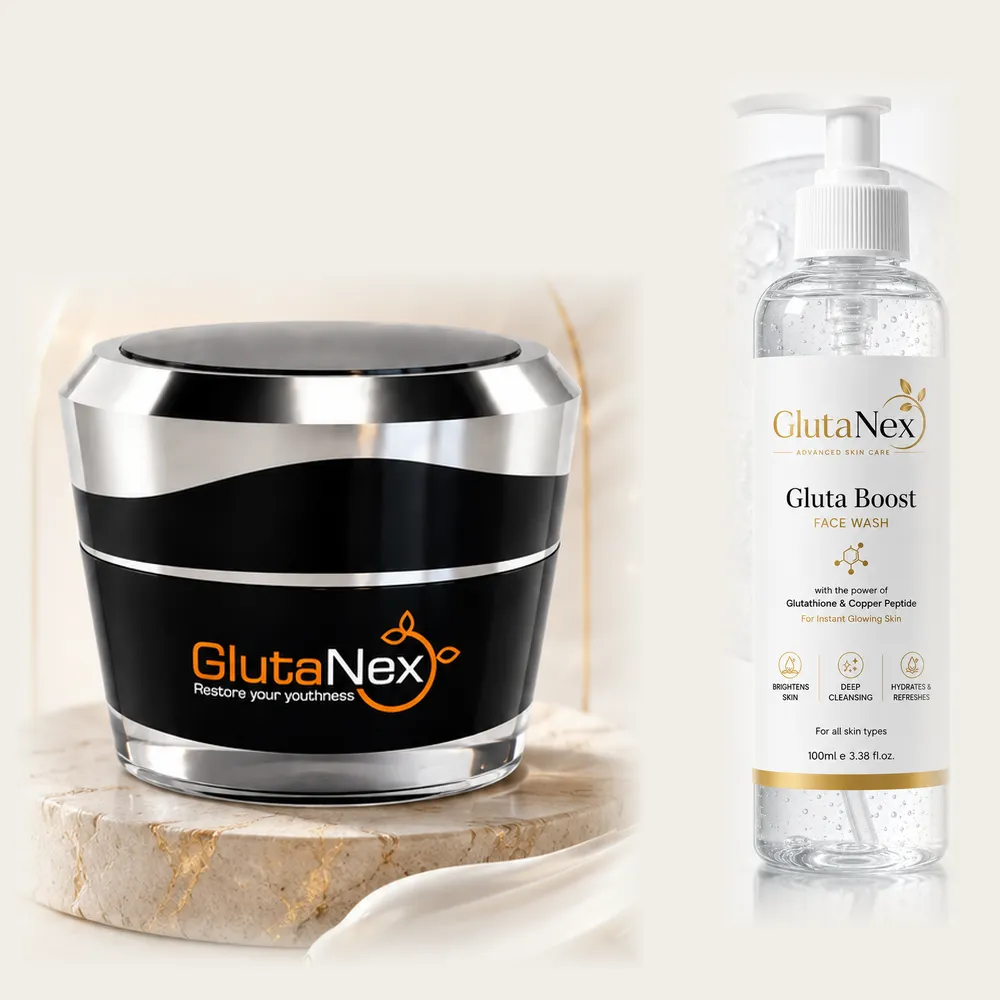
GlutaNex Glutathione Night Cream contains glutathione, niacinamide, hyaluronic acid, vitamin C, retinol, ceramides, salicylic acid, peptides, aloe vera, turmeric and neem. For blackheads, the salicylic acid, retinol and niacinamide are the parts doing the work; glutathione and vitamin C are there for a brighter, more even look. Read glutathione and salicylic acid for how the two fit together.
How to use a glutathione night cream on a blackhead-prone nose and chin
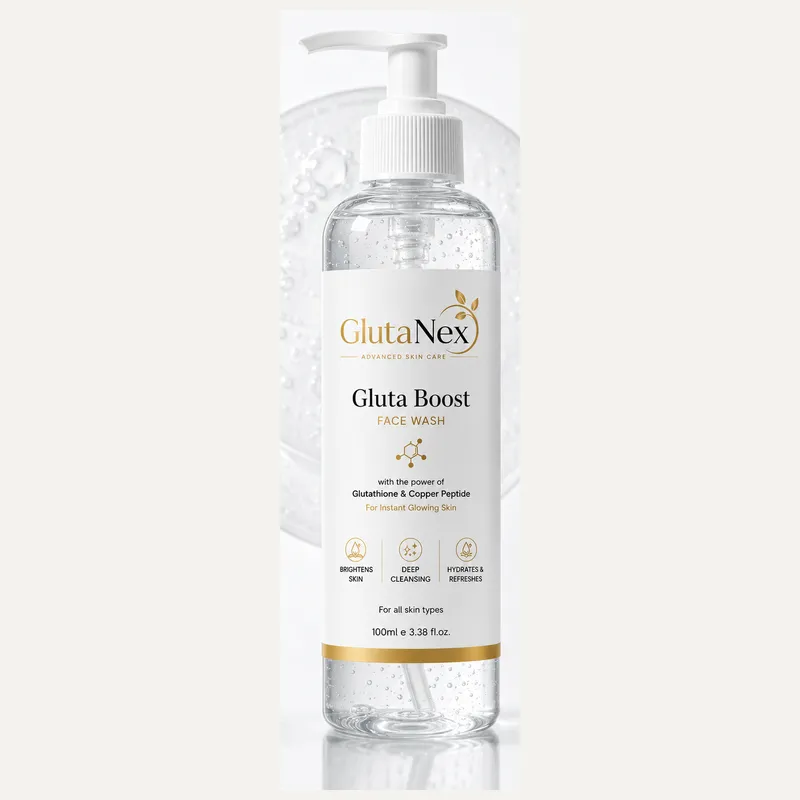
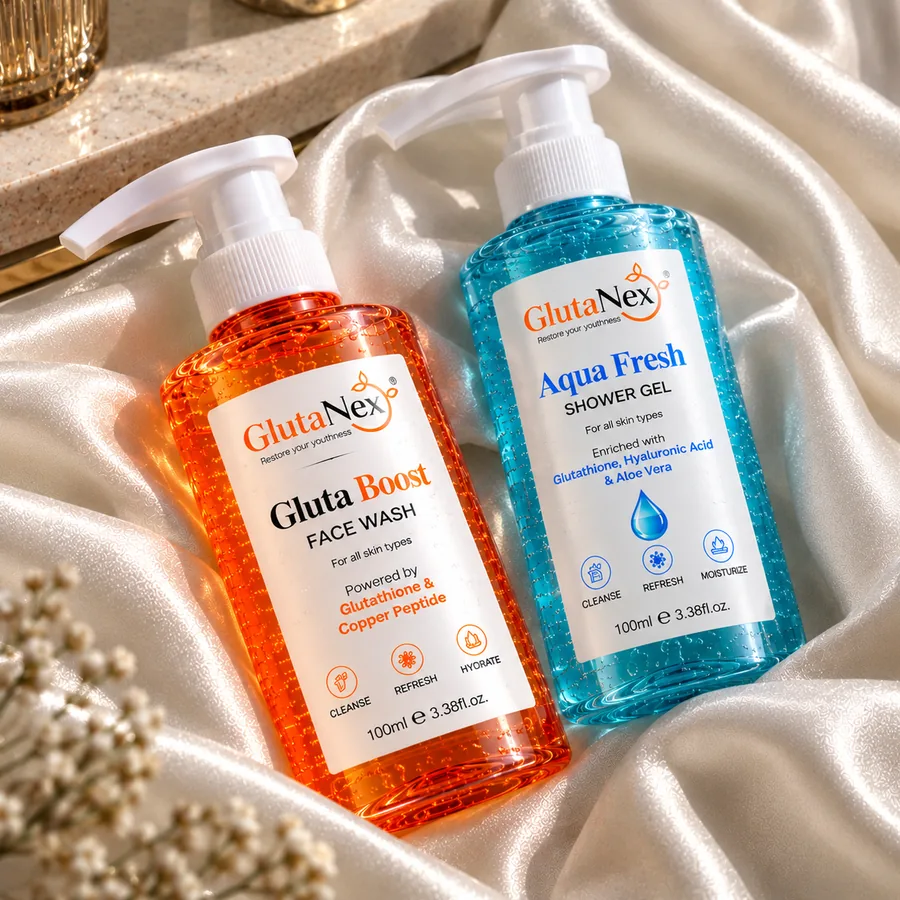
- Cleanse at night. Use a gentle face wash such as Gluta Boost Face Wash with lukewarm water to remove sunscreen, sweat and oil. Do not scrub the nose.
- Pat dry and wait a few minutes. Applying retinol on damp skin can sting more.
- Use a pea-sized amount for the whole face. Spread a thin layer over the nose, chin and forehead, and only a very thin layer at the sides of the nostrils, where skin flakes easily.
- Start with 2 to 3 nights a week. Build up to alternate nights over 2 to 3 weeks if your skin stays comfortable.
- Moisturise if you feel tight. Oily skin can still get dehydrated from actives; a light gel moisturiser on top is fine. See glutathione cream and moisturiser.
- Sunscreen every morning. Retinol and salicylic acid make skin more sun-sensitive.
Give it time. Skin renews over several weeks, so most people need 6 to 8 weeks of steady use before pores on the nose look clearly cleaner. Results vary, and blackheads often come back if you stop.
Home hacks to skip
- Squeezing with fingers or nails: pushes the plug deeper, stretches the pore and can leave dark marks on Indian skin.
- Peel-off nose strips and glue masks: pull out the top of the plug and some skin with it; pores refill within days.
- Toothpaste, baking soda or lemon: irritate the skin and do nothing for the plug.
- Daily scrubs: rough granules irritate oily skin, which can make it oilier.
- Steaming and then squeezing at home: steam alone does not open pores, and hot steam plus pressure can break capillaries. See face steaming with glutathione cream.
- Layering many acids at once: do not use a salicylic face wash, an acid toner and a retinol cream on the same night.
Blackheads in Indian weather
Humid months, from the pre-monsoon heat to the end of the rains, are when most people see more blackheads: sweat, oil and city dust sit on the skin for hours, and helmets and masks trap it on the nose and chin. In those months, wash your face when you get home, use lighter textures and keep the night cream to a thin layer. In north Indian winters, oily skin can feel tight on the cheeks but stay oily on the nose; care for the two zones differently, with a thin layer of the night cream on the T-zone and more moisturiser on the cheeks. Our glutathione cream for oily skin and combination skin guides go further.
Blackheads, open pores and pimples: what is the link?
Blackheads, open-looking pores and pimples often appear together on oily skin, but they are different. Pore size is mostly genetic; pores look bigger when they are full and skin is oily, and smaller-looking when clean. A blackhead can turn into a red pimple if it gets inflamed. If you are also worried about pores, read glutathione for open pores; if new pimples appear after starting a new cream, see can glutathione cream cause pimples.
When to see a dermatologist
See a dermatologist if blackheads come with many painful red pimples or deep, sore lumps, if your skin does not improve after 2 to 3 months of a steady routine, or if you want professional extraction or prescription creams. A dermatologist can also check whether what you see is acne, sebaceous filaments or something else. If you are pregnant or breastfeeding, skip retinol creams unless your doctor says it is fine.
General information about cosmetic skincare, not medical advice. Results vary from person to person. See a dermatologist for persistent or changing pigmentation.
More glutathione guides
Glutathione: what it is, what it does for skin, and how to use it safely
The complete guide: what glutathione is, how it affects skin, every form compared, and the research.
GuideGlutathione cream after hair removal cream: how long to wait
Can you apply glutathione cream after using a hair removal cream on the face or upper lip? Wait at least 24 to 48 hours. Why depilatory creams and retinol do not mix, what to apply instead and how to avoid dark marks.
GuideGlutathione cream in monsoon: how to use it in humid, rainy weather
Can you use glutathione cream in the monsoon? Yes, with a thinner layer, a lighter routine and sunscreen on cloudy days. How to adjust a retinol glutathione night cream for humid Indian rains.
 Night Cream
 Face Wash
 Glow Duo
 Shower Gel
 Wash + Gel Combo
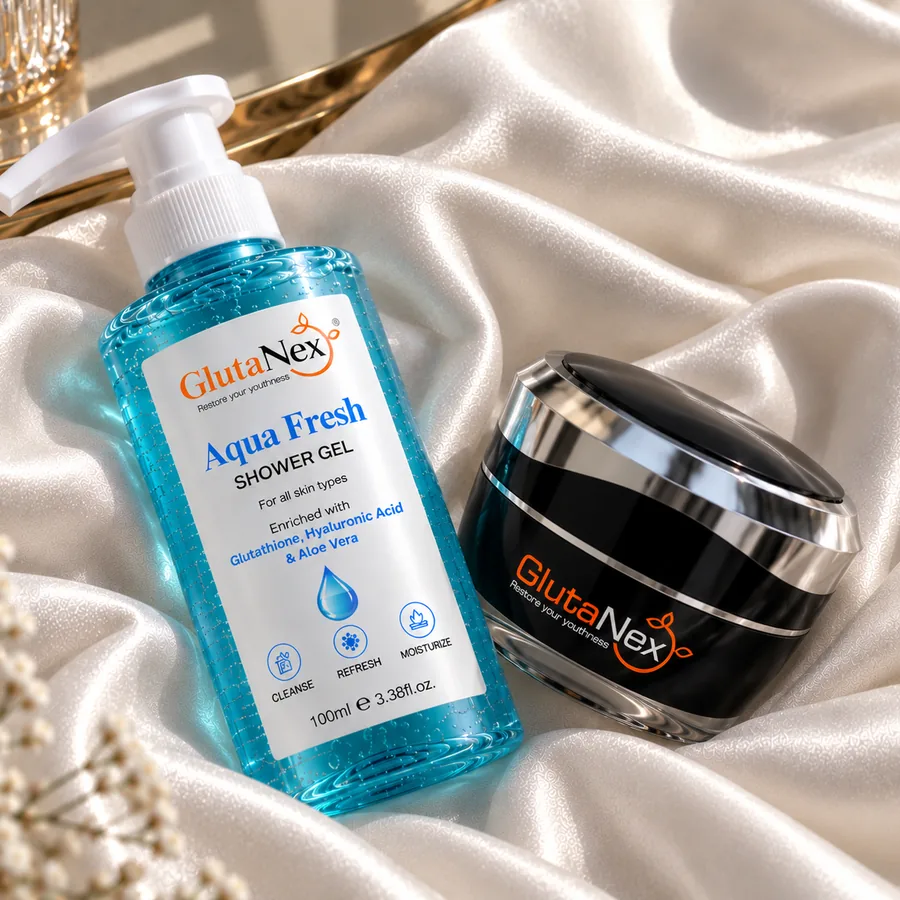 Cream + Gel Combo
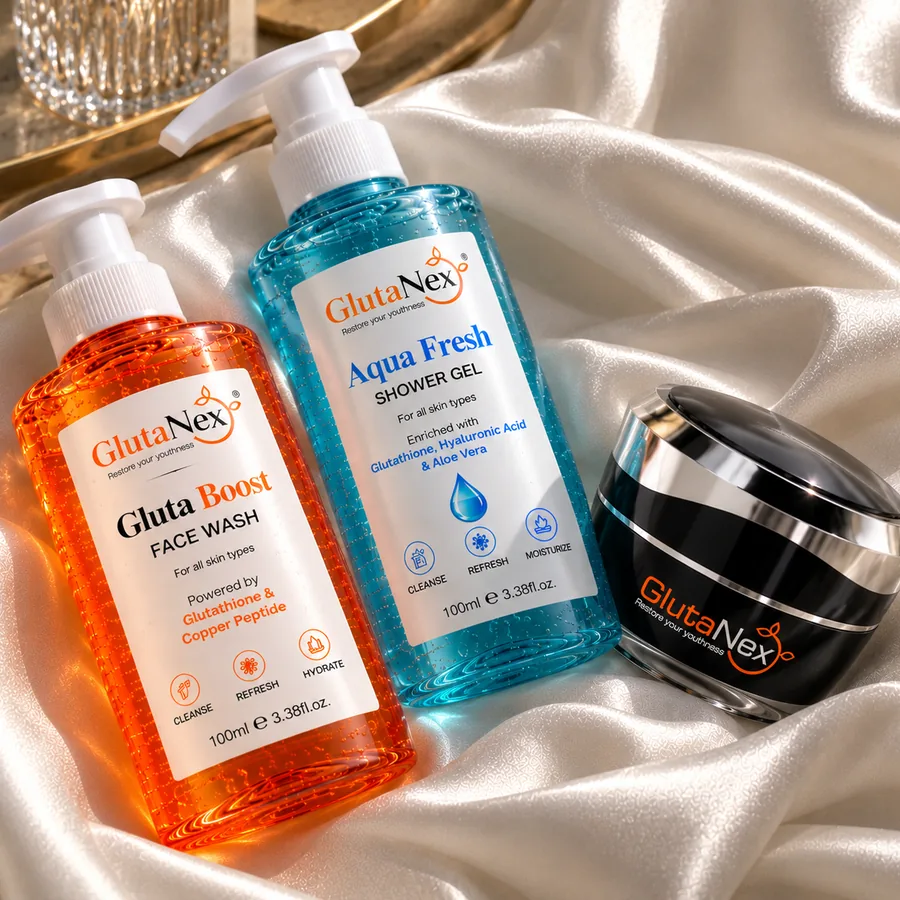 Glow Trio
