
Glutathione cream with tea tree oil: can you use both?
Can you use tea tree oil with glutathione cream? Only diluted, only on single spots, and not on the same night as a retinol or salicylic acid cream. Safe way to use both, who should skip it, honest results.
Can I use tea tree oil with glutathione cream?
Yes, with care. Never put pure tea tree oil on the face: use a ready-made diluted spot product, or dilute it well in a plain carrier oil, and dab it only on single pimples. If your glutathione cream has retinol or salicylic acid, keep tea tree for the nights you skip that cream.
Should I apply tea tree oil before or after glutathione cream?
If both go on the same night, apply the cream on the face first and dab a tiny amount of diluted tea tree oil only on a pimple afterwards, avoiding the area around it. With a retinol or salicylic acid night cream, it is gentler to use them on different nights.
Does tea tree oil with glutathione cream remove pimple marks?
No. Tea tree oil is mainly used on the pimples themselves. Flat dark marks left behind fade slowly with daily sunscreen and steady care, and a glutathione cream may help them look lighter over 8 to 12 weeks. Neither changes your natural skin colour.
You can use tea tree oil and glutathione cream in one routine, but carefully. Never apply pure tea tree oil to the face: use it well diluted, only as a dab on single pimples, and if your night cream has retinol or salicylic acid, keep tea tree for the nights you skip it. Patch test first and wear sunscreen every morning.
Tea tree oil is a popular home step for pimples in humid Indian cities, and many people with oily, acne-prone skin also want a glutathione cream for marks and dullness. This guide explains how to combine them without irritating your skin.
Tea tree oil vs glutathione cream at a glance
| Tea tree oil | Glutathione cream | |
|---|---|---|
| What it is | A strong plant essential oil | A leave-on face cream |
| Where it goes | A tiny, diluted dab on a single spot | A thin layer on the whole face |
| Main cosmetic job | A spot step for the look of individual pimples | Brighter, more even-looking tone over weeks |
| Main downside | Can burn, dry or irritate if used neat or too often | Works slowly; needs sunscreen every morning |
| What it cannot do | Clear acne on its own or fade old marks | Treat acne or change your natural skin colour |
The safe way to use both
- Choose a diluted form. A ready-made spot gel or a product that already contains tea tree is easier than mixing your own. If you dilute it yourself, use only one drop in about a teaspoon of a plain carrier oil.
- Patch test the diluted oil on your jawline or behind the ear for two or three days before using it on spots.
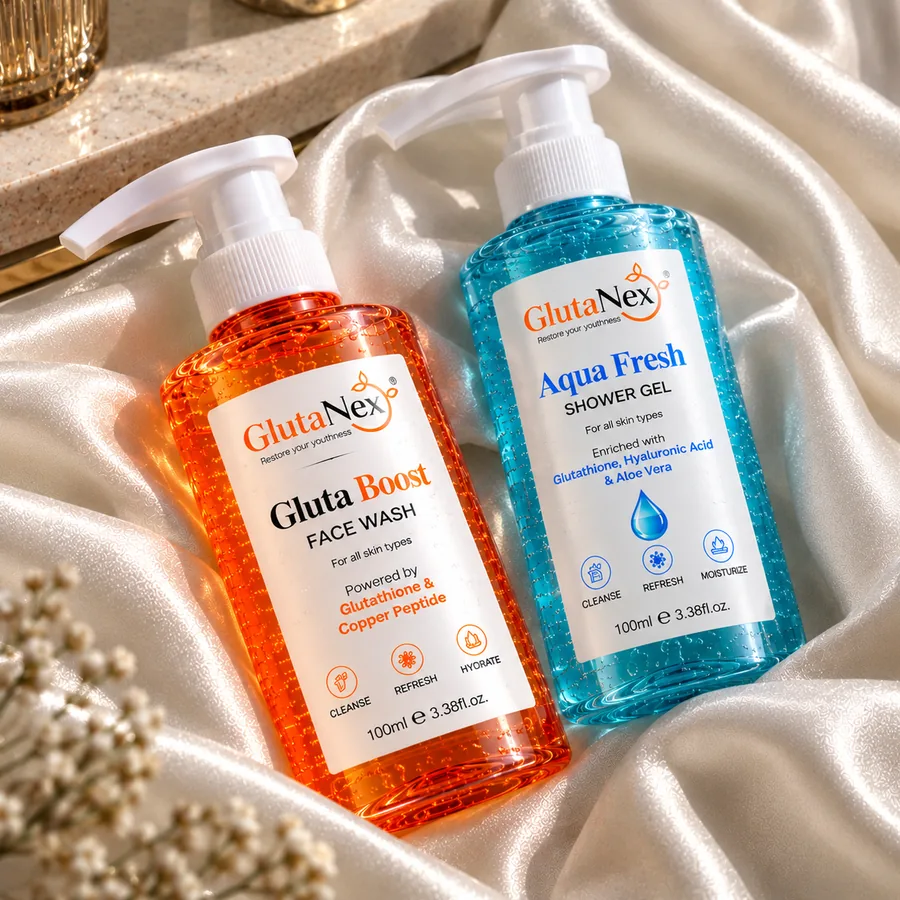
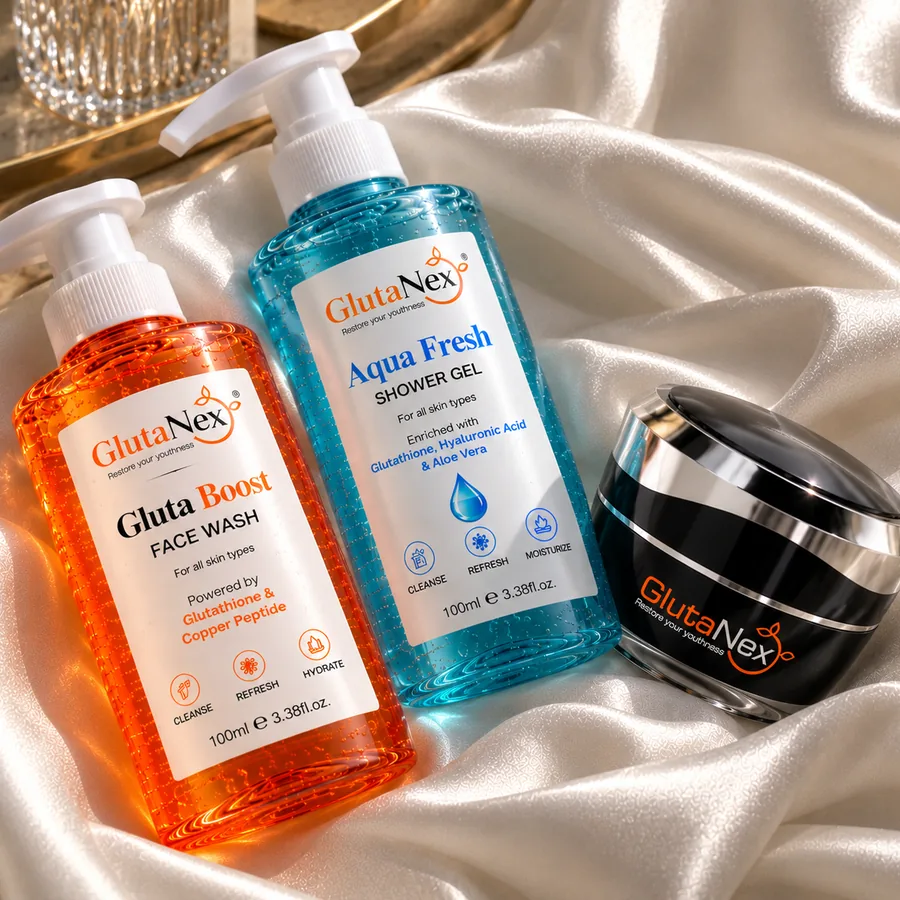
- Wash your face with a gentle face wash such as Gluta Boost Face Wash and pat dry.
- On cream nights: apply a thin, pea-sized layer of glutathione cream on the face, wait a few minutes, then dab a tiny amount of diluted tea tree only on a raised pimple, not on the skin around it.
- If your cream has retinol or salicylic acid, use tea tree on a different night instead (see the next section).
- Sunscreen every morning, SPF 30 or higher, oil-free if your skin is oily.
For the full face method, read how to use glutathione cream.
A special note on GlutaNex Night Cream
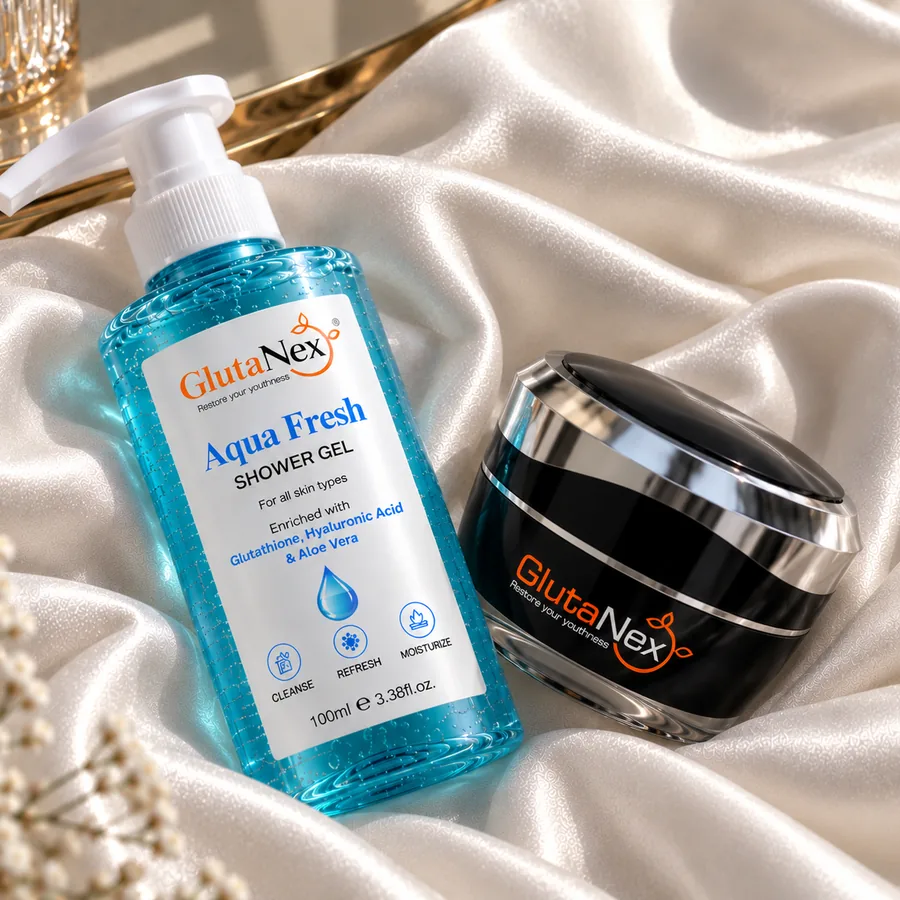
GlutaNex Glutathione Night Cream contains glutathione, niacinamide, hyaluronic acid, vitamin C, retinol, ceramides, salicylic acid, peptides, aloe vera, turmeric and neem. It does not contain tea tree oil. Retinol and salicylic acid can already make skin dry or tingly while it gets used to them, and adding a strong essential oil on the same night raises that risk.
- Start the cream 2 to 3 nights a week, and keep tea tree spot care for the other nights.
- If your skin is peeling, red or tingling, pause tea tree until it settles.
- Do not use the cream on the lips or on broken or freshly waxed skin, and never put tea tree on an open, picked pimple.
- If your face stings after the cream, wash it off and read glutathione cream burning.
For how the cream's salicylic acid fits with other spot products, read glutathione and salicylic acid. The cream also has neem; see glutathione and neem.
Tea tree mistakes to avoid
| Mistake | Why to avoid it |
|---|---|
| Pure tea tree oil on the face | It can burn, redden and dry the skin, and leave dark marks on brown skin |
| Tea tree oil mixed into the cream jar | It changes the cream and spreads a strong oil over your whole face every night |
| Rubbing it all over the face daily | Spot care is for spots; the rest of the face does not need it |
| Stacking it with other strong spot products on one night | Too many actives at once often leads to stinging and peeling |
| Using it near the eyes or on lips | These areas are thin and sensitive |
Who should skip tea tree oil
- Sensitive or easily red skin, or anyone who has reacted to essential oils or fragrance before; see glutathione cream for sensitive skin.
- Skin already irritated by a new retinol, salicylic acid or prescription cream.
- Pregnancy and breastfeeding: ask your doctor before using essential oils or a retinol cream.
- Children, unless a doctor suggests it.
Pimples vs pimple marks: an honest view
Tea tree oil is about the pimple itself; a glutathione cream is about the look of the flat brown marks left afterwards. Picking and squeezing make those marks last longer, and sun makes them darker, so sunscreen matters as much as any product. Read glutathione for acne marks and glutathione for oily skin. If a new cream seems to bring out bumps, see can glutathione cream cause pimples.
When to see a dermatologist
See a dermatologist if you have painful, deep or cystic pimples, acne that leaves pits or scars, acne that keeps coming back for months, or a rash after tea tree oil. Persistent acne needs a doctor, not stronger home oils.
General information about cosmetic skincare, not medical advice. Results vary from person to person. See a dermatologist for persistent or changing pigmentation.
More glutathione guides
Glutathione: what it is, what it does for skin, and how to use it safely
The complete guide: what glutathione is, how it affects skin, every form compared, and the research.
GuideGlutathione cream with orange peel powder: can you use both?
Can you use orange peel powder with glutathione cream? Yes, as a gentle rinse-off pack on a night you skip the cream, never rubbed hard or mixed into the jar. Right order, safe mixes, who should skip it, honest results.
GuideIce cube on face with glutathione cream: right order and safe use
Can you use an ice cube on your face with glutathione cream? Yes: wrap the ice in a cloth, keep it moving for about a minute, let skin warm back up, then apply the cream. What ice can and cannot do, and who should skip it.
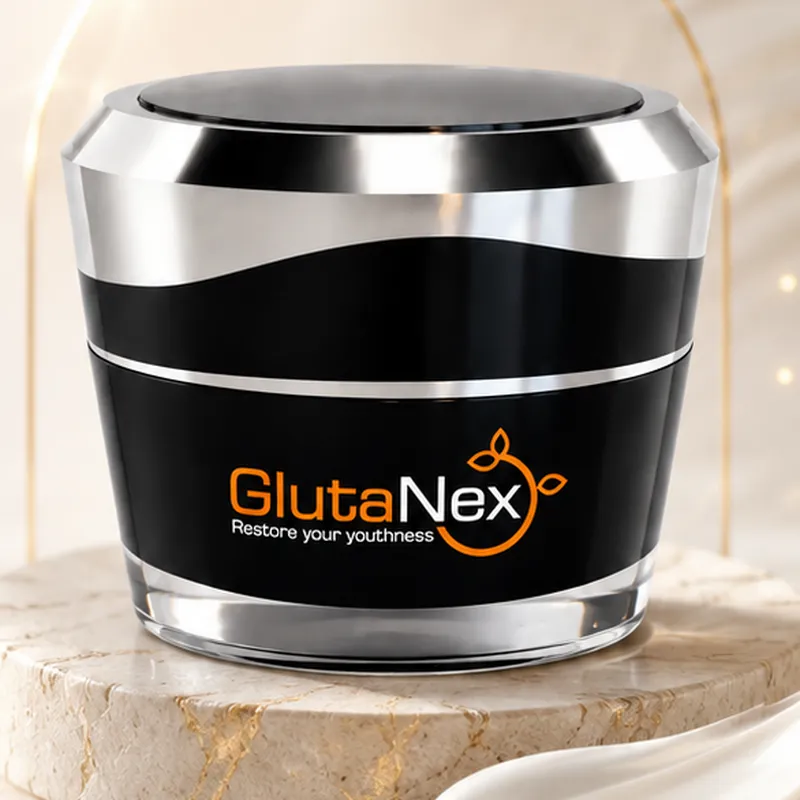 Night Cream
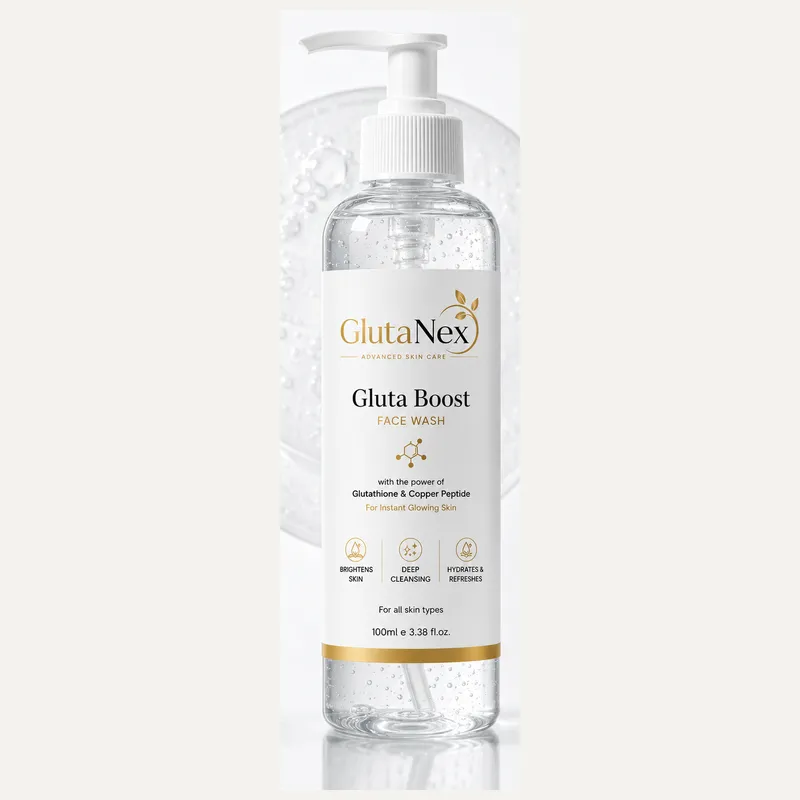 Face Wash
 Glow Duo
 Shower Gel
 Wash + Gel Combo
 Cream + Gel Combo
 Glow Trio
